- Your cart is empty Browse Shop
Project Resources
Get access to project documents here. For exclusive details, please send us an email on info@eaffu.org or call 020 4451691
Upscaling Push-Pull for Sustainable Intensification of Smallholder Farming Systems in East Africa (UPSCALE)
Project Overview
UPSCALE, Upscaling Push-Pull for Sustainable Intensification of Smallholder Farming Systems in East Africa is a Horizon 2020 Research and Innovation project worth €7.66 million, which started in November 2020 and ran for 5 years. The Eastern Africa Farmers Federation (EAFF) was a key consortium partner, playing a central role in stakeholder engagement, dissemination, and the promotion of push-pull technology adoption among smallholder farmers across the region.
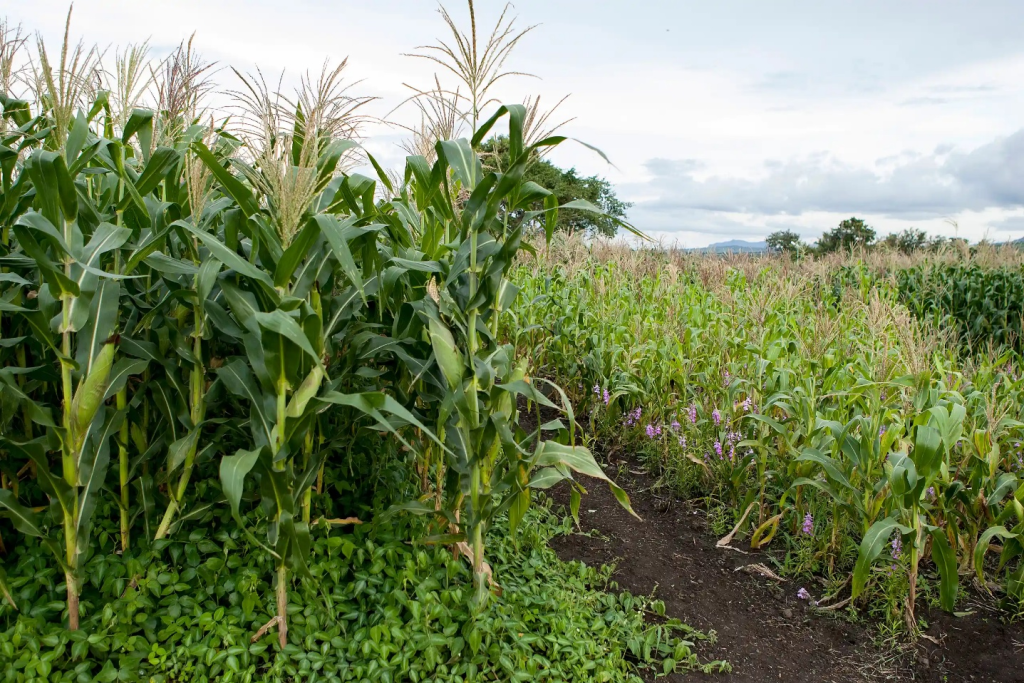
The project addressed a critical challenge: closing the yield gap in African smallholder agriculture in the face of climate change, while recognizing that conventional methods of agricultural intensification are environmentally costly, unsustainable, and poorly adapted to low-income farming. Push-pull is an integrated cropping system that involves driving pests away from the main crop using a repellent intercrop while attracting them out of the crop with trap plants. Push-pull also improves soil health and water retention, provides economic and high-value livestock fodder, and a recently developed climate-smart variant using traditional cereal varieties increases system resilience to climate change.
UPSCALE aimed to take key steps to realize the transformative potential of push-pull technology by expanding its scope and applicability from individual fields to whole landscapes and regions, and from cereal to other important crops and cultivation systems. EAFF contributed specifically to stakeholder outreach, multi-actor knowledge exchange, and the adaptation of the e-Granary platform to support farmers in accessing input and output markets.
Funding Amount
- Total Budget: EUR 7,660,000
- EU Horizon 2020 Grant Agreement No: 861998
Implementation Period
November 2020 – 2025
Target Countries
UPSCALE was implemented across five countries in Eastern Africa:
- Ethiopia
- Kenya
- Rwanda
- Tanzania
- Uganda
Project Consortium
The UPSCALE consortium consisted of 18 partners from 4 European and 6 African countries, led by Justus Liebig University Giessen (Germany). Other key partners included the International Centre of Insect Physiology and Ecology (icipe), Maseno University, JKUAT, KALRO, and EAFF, among others.
Project Objectives
The overall goal of UPSCALE was to address food security, livelihoods, and climate change resilience in the sub-Saharan region of East Africa, while reducing the environmental impact of agricultural practices, by fostering the design, adaptation, and adoption of strategies for integrated agro-ecological management based on push-pull technology for widespread and climate-resilient sustainable intensification.
The project aimed to:
- Expand the scope and applicability of push-pull technology
- Scale up push-pull from individual fields to landscapes and regions.
- Extend push-pull beyond cereal crops to other important crops and cultivation systems.
- Test and validate push-pull under different climate scenarios, soil conditions, and farming systems.
- Strengthen multi-actor communities and transdisciplinary collaboration
- Coordinate with ongoing projects and platforms on sustainable intensification in Africa, forming multi-actor communities (MACs) for effective collaboration, and strengthening links between research, farmers, policymakers, and extension stakeholders.
- Build advocacy networks for supportive policy environments to promote push-pull adoption.
- Develop data-driven tools and digital innovations
- Develop and adapt dissemination toolboxes including a Knowledge Exchange Hub (KEH), mobile app, interactive integrative maps for spatial targeting of dissemination efforts, and long-lasting multi-actor communities.
- Adapt the e-Granary platform to connect farmers to markets.
- Address barriers to adoption and promote gender inclusion
- Identify socioeconomic and policy barriers to adopting push-pull technology and propose mitigation strategies for men, women, and youth farmers.
- Assess the socioeconomic impact of push-pull intensification on the livelihoods of different groups.
- Generate evidence for policy and knowledge sharing
- Produce scientific publications, practice abstracts, and policy briefs to support evidence-based decision making.
- Establish an interactive online map for geovisualisation of push-pull effectiveness across biophysical and climatic conditions.
Key Areas of Intervention
UPSCALE was structured around ten work packages covering: multi-actor transdisciplinary coordination; farm, landscape, and regional-scale determinants of push-pull success; functional mapping for mechanistic prediction; social-ecological impacts of enhancing push-pull intensification; knowledge synthesis for targeting upscaling under a changing climate; co-constructing push-pull expansion pathways; identifying barriers to adoption; exploitation, dissemination, and communication; project management; and ethics compliance.
EAFF’s primary responsibilities fell under dissemination and stakeholder engagement — developing and operating the Knowledge Exchange Hub, producing practice abstracts, supporting farmer outreach, and adapting digital tools to connect smallholders to markets.
Achievements and Results
Technology Adoption and Field Activities:
- Farmers across the districts of Bunda, Butiama, and Tarime in Tanzania’s Mara Region embraced push-pull technology following field trials, with documented positive outcomes in pest control and soil health.
- More than 160 farmers gathered at the Nyakabindi Knowledge Exchange Hub in the Simiyu region of Tanzania to engage with push-pull technology for sustainable maize farming.
- On-farm training sessions in Kumi District, Uganda, boosted push-pull adoption at community level, building local resilience and knowledge-sharing networks.
- Capacity-building training in Arsi Negele, Ethiopia, in collaboration with Wollo University, trained farmers and development agents on push-pull technology in sorghum production.
Knowledge Products and Deliverables:
- A synthetic review of options for the expansion of push-pull and its integration with other crops and practices was produced.
- A gender-based report on socioeconomic and policy barriers to push-pull adoption and strategies for addressing them was completed.
- A smartphone app was developed and adapted for push-pull capacity building, environmental impact monitoring, and networking of farmers across borders.
- An updated Knowledge Exchange Hub was established, along with a first and second batch of practice abstracts providing practical how-to guidance on push-pull implementation.
- A report on the socioeconomic, value chain, and governance impacts of upscaling push-pull was produced.
- Interactive online maps were developed to geovisualise the effectiveness of push-pull across different biophysical, climatic, land use, and socioeconomic conditions.
Multi-actor Engagement:
- Reports were produced on the identity and structure of multi-actor communities of practice formed in each study country and their links to existing projects, platforms, and networks.
- A strategic plan for multi-actor knowledge sharing and capacity building within MACs was developed and operationalised.
- Stakeholder promotion events and engagement activities were conducted across all five target countries, documented in a final stakeholder engagement report.
Through UPSCALE, EAFF strengthened its role as a regional champion of agroecological innovation — connecting smallholder farmers to cutting-edge research, practical technologies, and digital tools that are transforming how push-pull is understood, adopted, and scaled across Eastern Africa.